

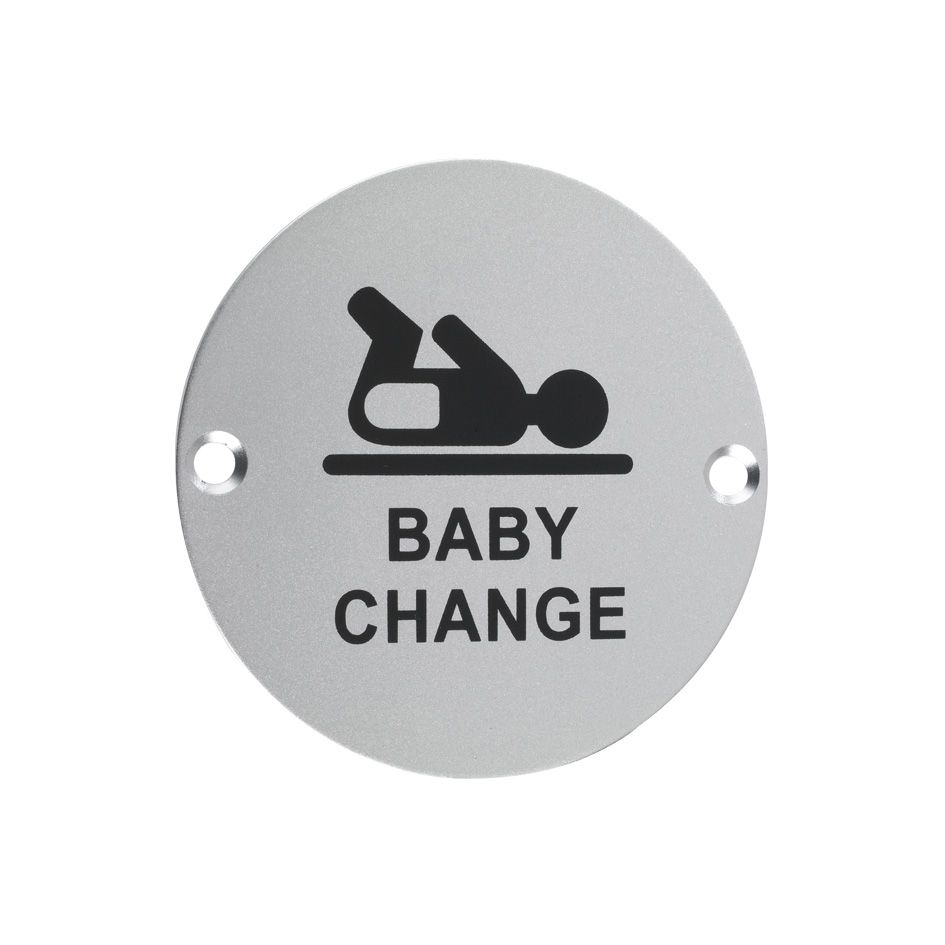
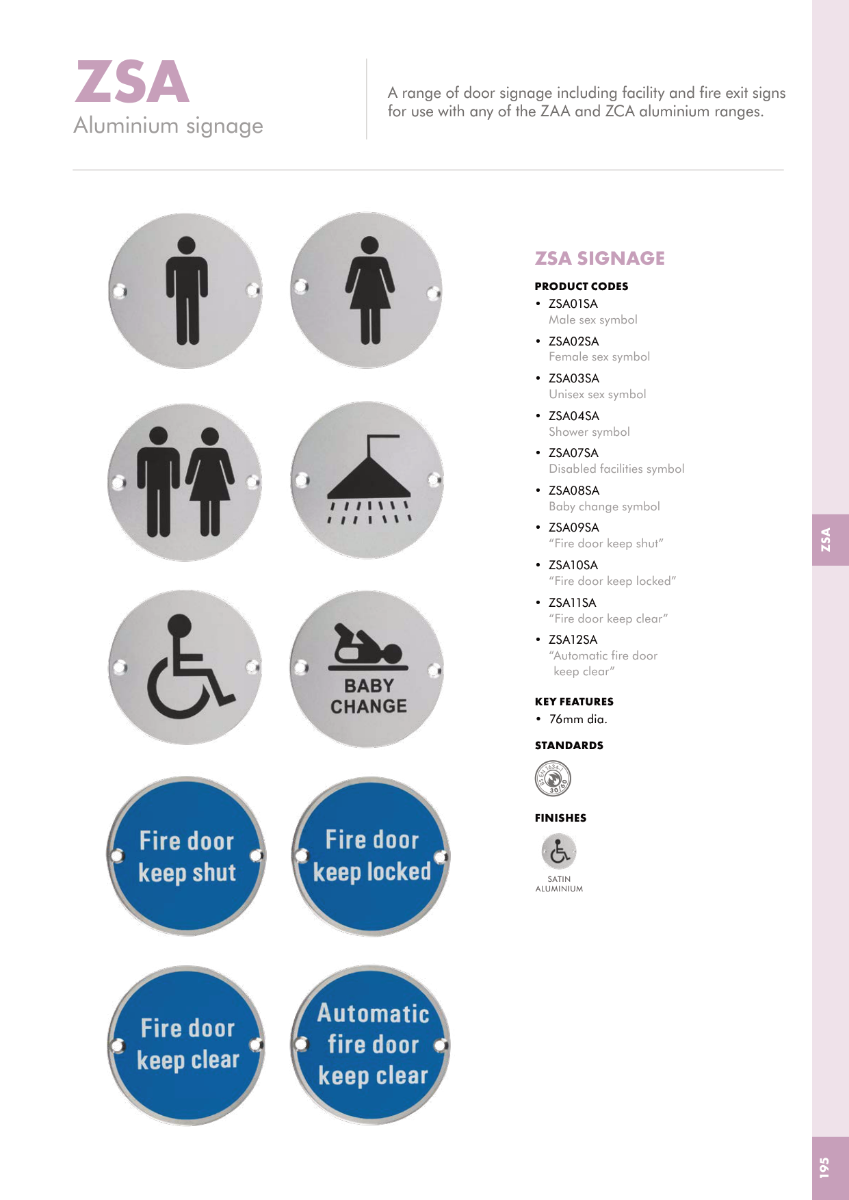
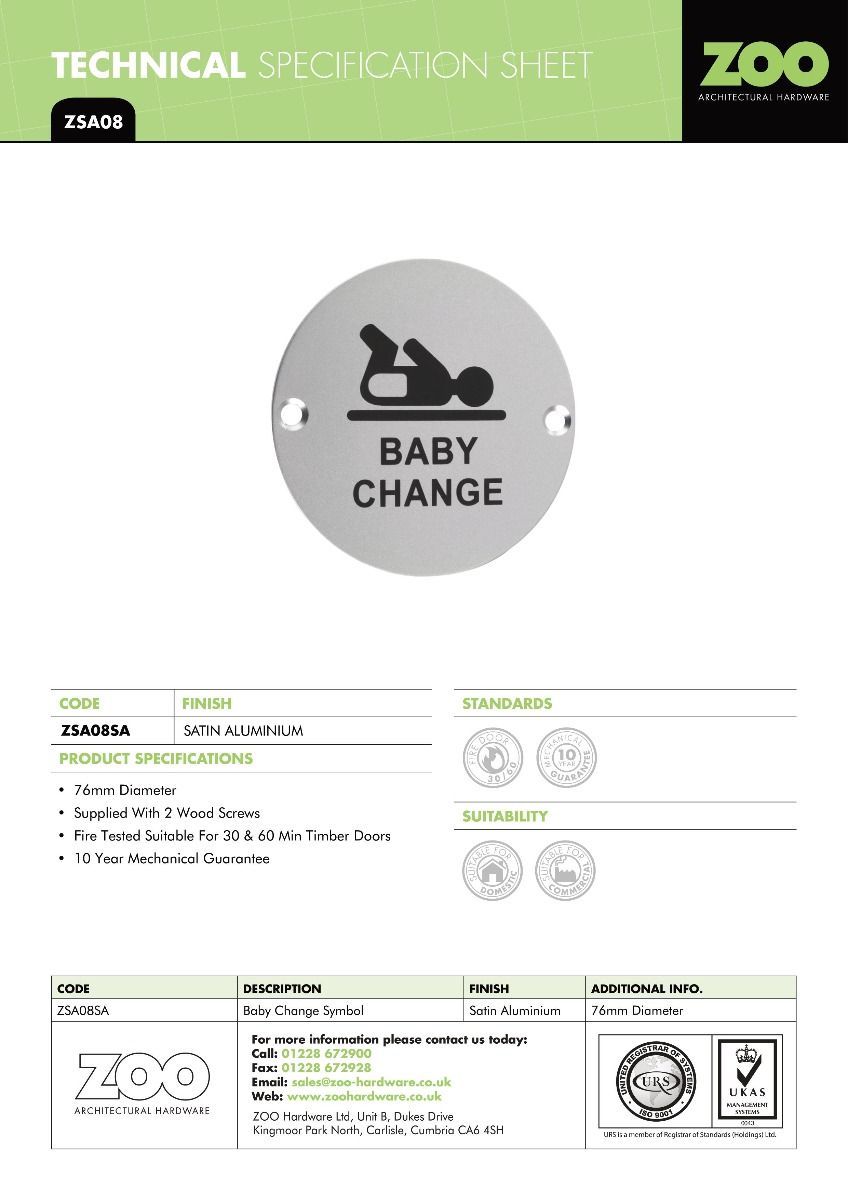
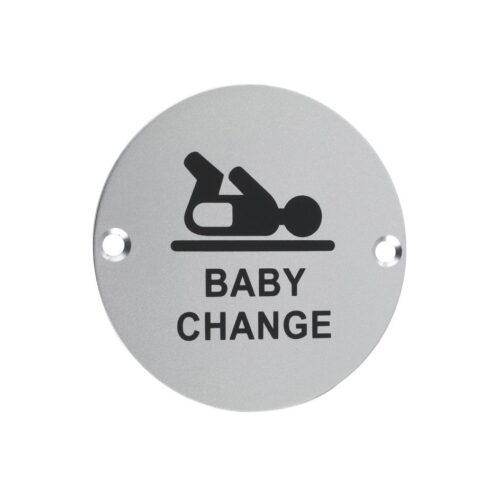
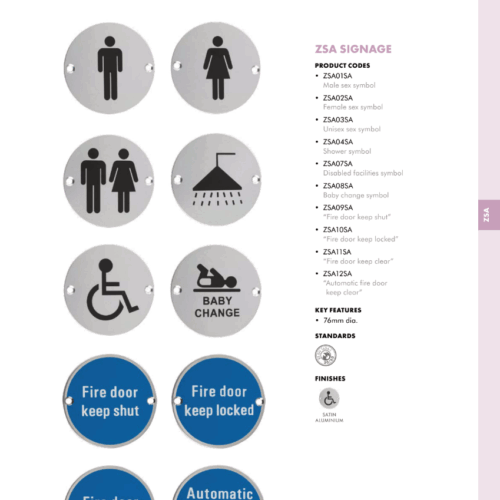
Baby Change Signage Durable Restroom Door Sign Clear Facility Indicator
£2.06£2.47 Excl. VATIncl. VAT
KEY FEATURES
- Zoo Hardware
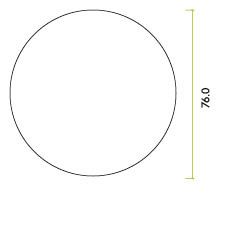
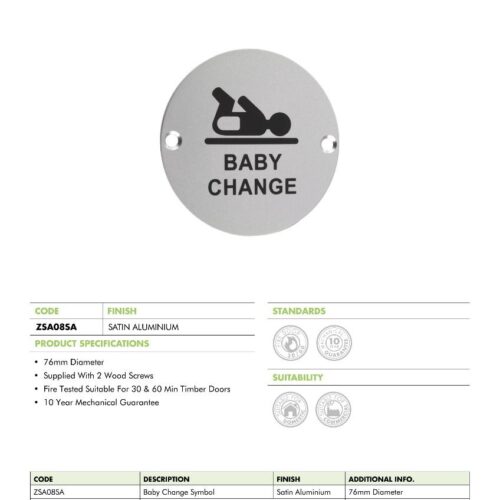
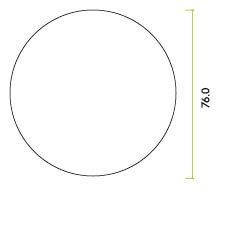
- Diameter: 76mm
- Supplied With 2 Wood Screws
- Fire Tested Suitable For 30 & 60 Min Timber Doors
In stock

Free Next Day Delivery on orders over £50

Free returns within 28 days

10 Year Guarantee
A Baby Change Door Sign is an essential piece of wayfinding for any public or commercial building, ensuring that parents and caregivers can easily locate facilities. Beyond simple identification, these Baby Change Door Sign are critical for maintaining universal accessibility and professional standards in hospitality, healthcare, and retail environments.
For professional environments, these Baby Change Door Sign represent the gold standard in durability, visibility, and compliance:
The High-Contrast Professional
The Baby Change Door Sign is an architectural favorite for modern office blocks and retail centers. Crafted from high-grade aluminum with a matte black finish, it provides exceptional visual contrast against light-colored doors, ensuring it is easily spotted from a distance.
-
Best For: Modern “Industrial” or “Minimalist” interiors.
-
Key Feature: Features Grade 2 Braille and raised tactile graphics for full accessibility compliance.
The Industrial & Healthcare Choice
In high-traffic zones like hospitals, airports, and sports stadiums, the Anneome Stainless Steel Baby Change Door Sign is the preferred specification. Made from Grade 304 Stainless Steel, it is resistant to harsh chemical cleaners and the heavy-duty use common in public facilities.
-
Best For: Hospitals, gyms, and transit hubs.
-
Key Feature: A non-glare brushed finish ensures readability under bright overhead lighting.
The Compact Utility Solution
For boutique settings or smaller facilities, the ADA CENTRAL Baby Changing Area Sign offers a compact footprint without sacrificing compliance. Its vibrant “Cold Blue” color is universally associated with care facilities, making it an intuitive choice for wayfinding.
-
Best For: Boutique cafes, small offices, and nurseries.
-
Key Feature: Tactile graphics designed specifically for ADA compliance.
Expanded Content: The Role of Baby Change Signage (800 Words)
1. Universal Design and Inclusivity
Modern facility management relies on Universal Design—the principle that environments should be accessible to everyone, regardless of age or ability. A Baby Change Door Sign is a cornerstone of this principle. It informs parents that a safe, dedicated space exists for infant care, reducing stress and improving the overall experience of the building.
2. Compliance Standards: Braille and Tactile Requirements
To meet international building codes (such as the ADA in the USA or Doc M in the UK), signage cannot be purely visual.
-
Tactile Graphics: The symbols must be raised (usually by 0.8mm) to be identified by touch.
-
Grade 2 Braille: This is a “contracted” form of Braille that allows for faster reading. It is a legal requirement for public bathroom signage to ensure blind or low-vision users can navigate the building independently.
-
Luminance Contrast: Accessibility codes often require a 70% contrast ratio between the sign and the door. Using a Black Acrylic Sign on a white or light timber door is a highly effective way to meet this requirement.
3. Material Durability and Hygiene
The environment surrounding a baby changing station is subject to high moisture and frequent sanitization.
-
Grade 304 Stainless Steel: As seen in the Btl Door Sign, this material is rust-proof and can withstand the aggressive cleaning agents required in public restrooms.
-
Aluminum Composite (ACP): Modern options like the ICraft asia Mirror Silver Sign provide a lightweight yet rigid alternative that is waterproof and resistant to extreme temperatures, making it suitable for both indoor and outdoor use.
4. Installation and Positioning Guide
-
Mounting Height: The baseline of the lowest tactile character should be between 1200mm and 1500mm from the floor. This ensures the sign is at eye level for most adults and reachable for those in wheelchairs.
-
The “Latch Side” Rule: Always install signs on the latch side of the door (the side with the handle). This prevents a user from being hit by the door while they are reading the tactile symbols or Braille.
-
Mounting Type: High-quality signs usually come with pre-drilled holes for secure screw fixing or a high-bond adhesive backing for a clean, drill-free installation on glass or metal doors.
5. Technical Specifications Comparison of Baby Change Door Sign
| Feature | BUILDINGSIGNS Aluminum | Anneome Stainless Steel | ICraft Asia Mirror Silver |
| Material | Solid Aluminum | Grade 304 Stainless | Aluminum Composite (ACP) |
| Finish | Matte Black | Brushed Silver | Mirror Silver |
| Braille | Yes (Grade 2) | No (Visual Only) | No (Visual Only) |
| Best For | Legal Compliance | High-Traffic Public | Boutique Aesthetics |
| Fixing | Adhesive | Surface Mount | Peel & Stick |
Summary Recommendation
If you are outfitting a legal-compliance facility where Braille is required, the Baby Change Door Sign is the superior choice due to its tactile depth and high contrast. For industrial or healthcare settings where sanitation is the priority, the Anneome Stainless Steel Baby Change Door Sign offers the best long-term durability.
This Baby Change Door Sign is a practical and clear way to indicate baby changing facilities in homes, public spaces, or commercial premises. Featuring a simple and recognisable design, it ensures that baby change areas are easy to locate, improving convenience for parents and carers. Made from durable materials, the Baby Change Door Sign is built to withstand frequent use while maintaining a clean, professional appearance. Its neutral and modern design blends seamlessly with a wide range of interiors, from public buildings and offices to cafes and family-friendly venues.
Easy to install, this Baby Change Door Sign can be securely mounted on most flat surfaces, providing long-lasting reliability. Its robust construction ensures it resists wear and tear, making Baby Change Door Sign ideal for high-traffic areas. Perfect for enhancing accessibility and wayfinding, this Baby Change Door Sign combines practicality, durability, and clarity, making baby changing facilities easy to identify for all visitors.
| Finish | |
|---|---|
| Material | |
| Style | |
| Type | |
| Size | |
| Unit |
Be the first to review “Baby Change Signage Durable Restroom Door Sign Clear Facility Indicator”
You must be logged in to post a review.
Related products

 Polish Stainless
 Powder Coat Black
 Powder Coat White
 PVD Bronze
 PVD Satin Brass
 Satin Stainless
 Polish Stainless
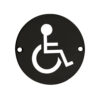 Powder Coat Black
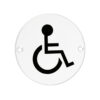 Powder Coat White
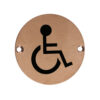 PVD Bronze
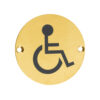 PVD Satin Brass
 Satin Stainless
 Polish Stainless
 Powder Coat Black
 Powder Coat White
 PVD Bronze
 PVD Satin Brass
 Satin Stainless
Reviews
There are no reviews yet.